
All About Gundogs: Common Training Problems and Solutions
- Naomi White

- Sep 14, 2025
- 5 min read
Gundogs are one of the most popular breed groups in the UK, and they’re especially common in our local Surrey and Hampshire area. It’s easy to understand why because they’re intelligent, active, and often fit into family life with ease.
What Are Gundogs?
Gundogs were originally bred to work alongside people during hunting, helping to locate, flush out, and retrieve game. Today, many are much-loved family pets, but those working instincts are still there.
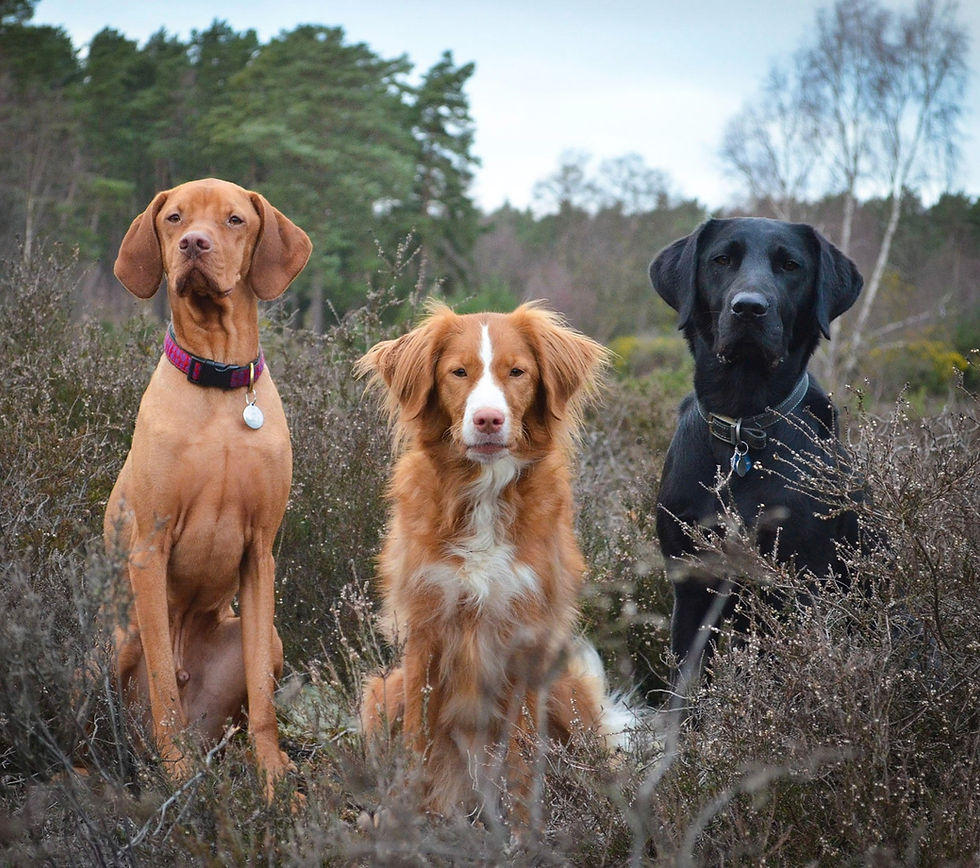
Common gundog breeds include:
Spaniels
Retrievers
Setters
Pointers
Vizslas
These breeds were carefully selected for traits such as stamina, focus, scenting ability, and a strong retrieve drive, all things that can make them wonderful companions, but also a handful without the right training.
Why Gundogs Are Popular
Gundogs tend to make great family pets because they have been bred to work closely with people, they are often naturally sociable and keen to please, making them easier to train (in theory!) and adaptable to family life.
People aren’t necessarily wrong when they label breeds like Labradors and Golden Retrievers as “the best breeds for families, first-time dog owners or “busy dog owners”.
But not every Labrador is easy, and not every spaniel is naturally adaptable to family life.
Breeding lines, early socialisation, and training approach all make a huge difference. A gundog can be the perfect pet, but they need consistent training and outlets for their natural drives.
Common Gundog Problems
Because gundogs are so driven by instinct, many of their behaviour struggles stem from their working heritage. Here are some of the most common ones we see in Surrey and Hampshire:
Recall
If you’ve ever been out in the Surrey Hills and your spaniel has disappeared for what feels like an eternity, you’re not alone. Gundogs are bred to follow scent, chase, or retrieve, so recall doesn’t always come naturally.
Chasing squirrels, deer, or pheasants is irresistible for many, and while most gundogs will return eventually, the risks (traffic, livestock, getting lost) are real. Once they’re in ‘hunting mode’, their ears can quite literally turn off because all their energy is focused on following the scent, meaning their hearing is no longer a priority. That’s why your recall might be falling on deaf ears as soon as you see your dog catch onto a scent or spots a deer to chase.
Reliable recall requires structured training and plenty of practice in safe environments like secure dog fields, of which there are plenty in Surrey.
Read more of our recall tips here: https://www.houndspot.com/post/5-recall-mistakes-everyone-makes-and-how-to-fix-them
Resource Guarding
Breeding in gundogs has historically enhanced their drive to pick up and hold game (e.g. pheasants, birds etc.). Many gundog breeds still possess this trait today and they are driven to carry things in their mouths.
Pet dog owners aren’t typically out in the hunting fields with their dogs, so they are more likely to direct this innate behaviour onto things which we may consider ‘inappropriate’, like our shoes, children’s toys, socks, or the TV remote.
This is where problems can quickly arise. It feels normal for us to take those items away from our dogs, maybe removing them from their mouths or chasing them around until we catch them. Unfortunately, this can cause a dog to try to keep items away from us. They may feel fearful of a person’s reaction or fearful of losing the item they deem valuable. They can also find it a fun game to run away with stolen items, knowing it gets attention!

There seems to be some genetic influences in resource guarding too, for example, some lines of spaniels (and therefore, the spaniel crosses like cockapoos) can be predisposed to guarding behaviours. In some dogs this can be seen from a very early age, almost without any provoking. While in others, it the behaviour appears after a few mishandled situations.
Prevention is better than cure and resource guarding is a complex behaviour so if you have any concerns then contact us at The Hound Spot for more advice on how to handle and improve the behaviour.
For more quick tips, read our blog on resource guarding: https://www.houndspot.com/post/resource-guarding-in-dogs
Lead Walking
Loose lead walking is a challenge for most dogs, but gundogs can find it especially tough. They want to be sniffing, exploring, and moving at a pace that doesn’t match ours. Restriction can feel frustrating, and frustration leads to pulling, lunging, and high stress on walks.
For gundogs, learning to walk calmly on lead isn’t just about obedience, it’s about teaching them how to cope with excitement, self-regulate, and understand what’s expected in different environments. It also involves providing sufficient outlets for natural behaviours, like time to sniff and walk or run freely.
Trying to walk your over-excited, frustrated and stressed-out working Cocker Spaniel down Guildford High Street is probably going to end with a sore arm and a choking dog at the end of the lead. Managing the environment is key to success:
Teach loose lead skills in low distraction environments to begin with.
Give plenty of regular breaks and outlets for sniffing so frustration doesn’t rise.
Monitor for signs of stress and anxiety, if your dog is worried by a busy road or town, then loose lead walking will be impossible too.
Use a well-fitted harness, such as Perfect Fit or T Touch, to avoid strain on your dog’s neck and to set them up for success. Remember, harnesses don’t cause or encourage pulling, but they can be a useful tool to teach lead skills in a safe and successful way.
Loose lead walking is not a skill that comes easily to many gundogs, so contact us at The Hound Spot for more help and constructive training support.
Helping Gundogs Thrive
The key to a happy gundog is recognising their breed traits and working drives. They need more than just physical exercise, they benefit from productive mental stimulation, training games, and activities that channel their instincts in appropriate ways.

A few simple ideas for local gundog owners:
Use woodland walks or long grass for scent games (hide toys or treats for your dog to find).
Practise recall in secure fields before venturing into open countryside.
Use a longline to improve their recall and maintain control in different environments.
Swap ball-chasing for retrieve games which enhance impulse control and active thinking (e.g. hide-and-seek, wait until released to find a ball in long grass).
Final Thoughts
Gundogs are wonderful companions, but their working instincts can present real challenges if not understood. If you’re struggling with recall, guarding, or loose lead walking, you’re far from alone, these are the exact issues we see every week.
With the right training, gundogs can learn to channel their instincts in positive ways and become the loyal, adaptable family dogs they’re famous for.
👉 If you live in Surrey or Hampshire and want support with your gundog, we’d love to help. Whether it’s recall, lead walking, or managing guarding behaviours, we offer tailored training programmes designed for your dog’s unique needs.


Comments